
Leaky Gut Test
Test for Candida, Zonulin, Occludin, and LPS (Inflammation)
$195.00
All systems within our bodies are "leaky." For example, that is how our cells become nourished from the nutrients in blood plasma. It "leaks" into the interstitial space, where cells can absorb nutrients. However, tissue may become "too leaky." This is particularly true of the gut lining, where pathogens and partially digested foodstuffs can leak into the bloodstream.
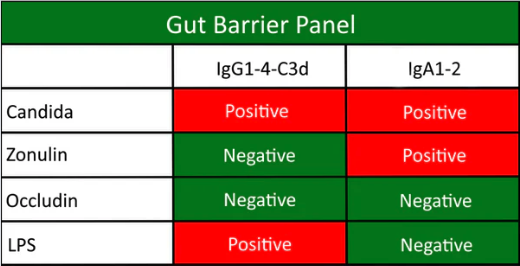
There are solid markers of excess leakage, candida, zonulin, occludin, and LPS. KBMO (and other labs) tests for these markers in blood obtained "at home" via a fingerstick (needle).
K For each marker, IgG 1-4 /C3d in addition to IgA 1 and 2 are measured.
Candida
Screen for candida overgrowth in the stomach/dysbiosis as a precursor to leaky gut occurrence.
Zonulin
Zonulin is a marker of intestinal permeability, otherwise known as leaky gut. If a patient has elevated Zonulin levels, the normal regulation of the tight junctions is compromised.
Occludin
Occludin is a marker of tight junction stabilization and optimal barrier function. Elevated occludin levels indicate that tight junctions are breaking down.
Lipopolysaccharides (LPS)
LPS is a major structural component of the outer membrane of gram-negative bacteria. Elevated levels of antibodies against LPS may indicate Leaky Gut Syndrome and other gastrointestinal inflammatory diseases.
Major Bacterial Pathogens
Helicobacter pylori: Directly increases permeability by redistributing tight junction proteins (e.g., ZO-1). Commonly linked to gastric and duodenal issues but can contribute to broader gut barrier dysfunction.
Certain pathogenic E. coli strains (e.g., enteroaggregative or enteropathogenic): Produce toxins and cause inflammation that weakens tight junctions.
Other bacteria: Salmonella, Shigella, and some Campylobacter species damage the epithelium during acute infections.
Fungal Pathogens
Candida albicans (and other Candida species): Overgrowth is strongly associated with leaky gut. In its invasive hyphal form, it penetrates the intestinal lining, causes inflammation, and directly compromises tight junctions. Often linked to antibiotic use, high-sugar diets, and dysbiosis.
Parasitic Pathogens
Giardia lamblia (Giardia intestinalis): Disrupts tight junctions, damages the epithelial layer, alters mucus production, and promotes bacterial translocation.
Entamoeba histolytica: Invades the mucosa, causes ulceration, and significantly increases permeability.
Other protozoa and helminths (e.g., certain hookworms, Cryptosporidium, Toxoplasma gondii): Can damage epithelial cells or alter barrier function.
Viral Pathogens
Enteric viruses (e.g., rotavirus, norovirus, and others) can cause acute barrier disruption.
HIV: Causes HIV enteropathy with villous atrophy and increased permeability, even without opportunistic infections.
Obligate Intracellular Pathogens (Connecting to Prior Discussion)
Some obligate intracellular bacteria, such as Chlamydia pneumoniae and certain Rickettsia species, may contribute indirectly through systemic inflammation and immune dysregulation, though they are less directly linked to gut barrier damage than the above.
Dietary Factors (One of the biggest contributors)
High-sugar, high-saturated fat, processed foods, and low-fiber diets.
Emulsifiers, refined carbohydrates, and certain additives.
Excessive alcohol consumption.
Gluten (especially in people with celiac disease or non-celiac gluten sensitivity).
Medications
NSAIDs (e.g., ibuprofen, aspirin) — chronic or overuse.
Antibiotics (disrupt gut microbiota).
Chemotherapy and radiation therapy.
Gut Microbiota Imbalance (Dysbiosis)
Overgrowth of harmful bacteria, infections, or loss of beneficial microbes.
Often triggered by poor diet, antibiotics, or illness.
Chronic Inflammation and Diseases
Inflammatory bowel disease (Crohn’s, ulcerative colitis).
Celiac disease.
IBS, SIBO, and other gastrointestinal conditions.
Infections (bacterial, viral, parasitic).
Stress
Chronic psychological stress disrupts the gut barrier and microbiota balance.